
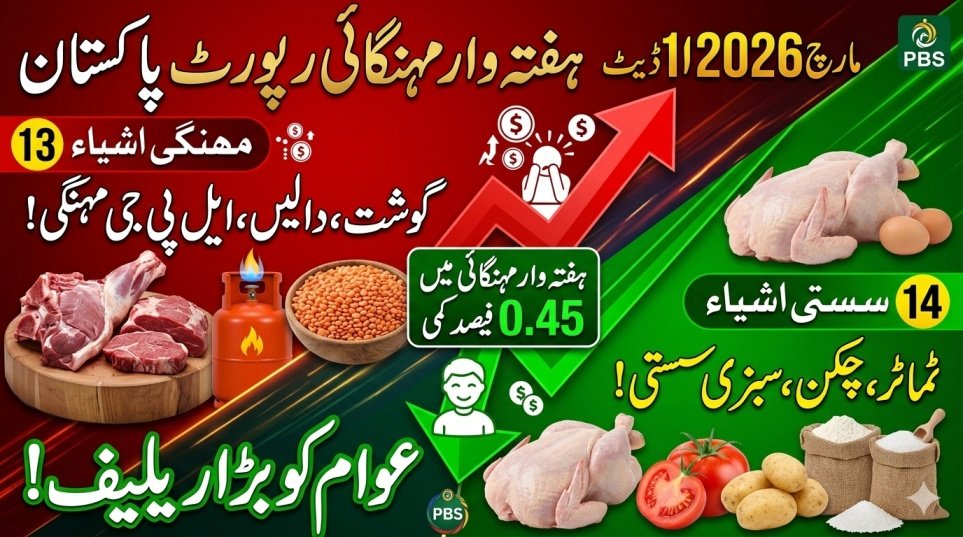
Pakistan is experiencing a fluctuating wave of inflation in 2026, affecting the prices of essential commodities. According to the Pakistan Bureau of Statistics (PBS), while some items have become slightly cheaper, many basic necessities remain expensive for the average household. This article explains the latest weekly price trends, highlighting which goods got more expensive and which provided some relief to consumers.
| Category | Details |
|---|---|
| Items That Increased in Price | 13 |
| Items That Became Cheaper | 14 |
| Weekly Inflation Decrease | 0.45% |
| Annual Inflation Rate | 4.23% |
| Wheat Flour Price Increase | 29.81% |
| Electricity Tariff Annual Increase | Over 17% |
| Gas Charges Increase | 30% |
| Most Reduced Items | Tomato & Chicken |
Which Commodities Became More Expensive?
PBS reports that weekly price hikes were seen in essential kitchen items, particularly protein sources and pulses, creating a financial strain on families.
- Meat Prices: Mutton and beef prices increased for both large and small cuts.
- Pulses: Lentils such as Masoor and Moong became more expensive.
- Dairy Products: Yogurt and powdered milk prices also went up.
- Other Items: Garlic, LPG, and even clothing saw price increases.
For more detailed statistics, visit the official Pakistan Bureau of Statistics website.

Relief for Consumers: Items That Became Cheaper
Some positive news emerged as prices for vegetables and poultry decreased, providing relief for household budgets.
- Vegetables: Tomato, potato, and onion prices fell noticeably.
- Poultry and Eggs: Chicken and egg prices dropped, easing daily expenses.
- Staples: Flour, sugar, and bread became slightly cheaper.
- Government Monitoring: Active price checking contributed to a 0.45% weekly decrease in inflation.
Annual Inflation Comparison
Despite weekly improvements, annual inflation remains high for key necessities, especially energy and food items.
| Commodity / Service | Annual Price Increase (%) |
|---|---|
| Wheat Flour | 29.81% |
| Gas Charges | 30% |
| Tomato | 17% |
| Red Chili | 15% |
| Firewood | 11.4% |
| Electricity Tariff | 17%+ |

Energy Price Hikes and Their Effect
A major contributor to rising inflation in Pakistan is the continual increase in electricity and gas prices. Higher energy costs translate into higher production costs for goods, which are ultimately passed to consumers.
- Gas Rates: 30% increase affects both industrial and household users.
- Electricity Tariff: Over 17% hike raises monthly bills significantly.
- Other Energy Costs: Prices for firewood and jaggery increased by 8-11%.
Latest Information 2026
At the start of March 2026, several new trends are emerging in the Pakistani economy regarding prices:
- Weekly Stability: Overall annual inflation rate stands at 4.23%, showing improvement over previous years.
- Improved Supply Chains: Better availability of wheat and vegetables is helping stabilize prices.
- Energy Price Pressure: Global fuel prices continue to influence electricity and gas rates.
Conclusion
In summary, last week in Pakistan saw mixed inflation trends. While 13 essential items like garlic, meat, and lentils became more expensive, 14 items including tomatoes, chicken, flour, and sugar became cheaper, giving consumers some relief. Annual increases in flour and gas remain concerning, but the 0.45% weekly reduction in inflation is a positive sign for the economy.
FAQs:
Will inflation decrease further in the coming weeks?
PBS suggests weekly declines are possible, but global oil prices and local crop production will influence future trends.
Why are electricity and gas prices rising?
Increases are mainly due to IMF conditions and efforts to reduce the circular debt in the energy sector.
Why did wheat flour prices rise so sharply annually?
Higher wheat support prices and increased transportation costs caused flour prices to rise nearly 30% year-on-year.
Which items gave the most relief to consumers?
Tomatoes and chicken prices fell significantly, providing the biggest savings for households.
Latest Updates
 Fuel Subsidy for Motorcycles Sindh 2026 Eligibility via SMS
 Fuel Subsidy for Motorcycles Pakistan 2026 Eligibility via SMS
 Today Update: Kuwait Announces Monthly Allowance for Single Women – 2026 Social Welfare Update
 Today Update: Punjab Fake E‑Challan SMS Scam Alert 2026 — How to Protect Yourself Online
 Latest Update: How To Apply Online For Himmat Card 2026 – Complete & Updated Guide
 Latest Update: Step-by-Step Guide to Register a Complaint via Helpline 1000
 Latest Update: Punjab Class 9 Exam Date Sheet 2026 – Full Schedule Announced
 Latest Update: 8171 Web Portal Balance Check by CNIC 2026 – Complete Guide