
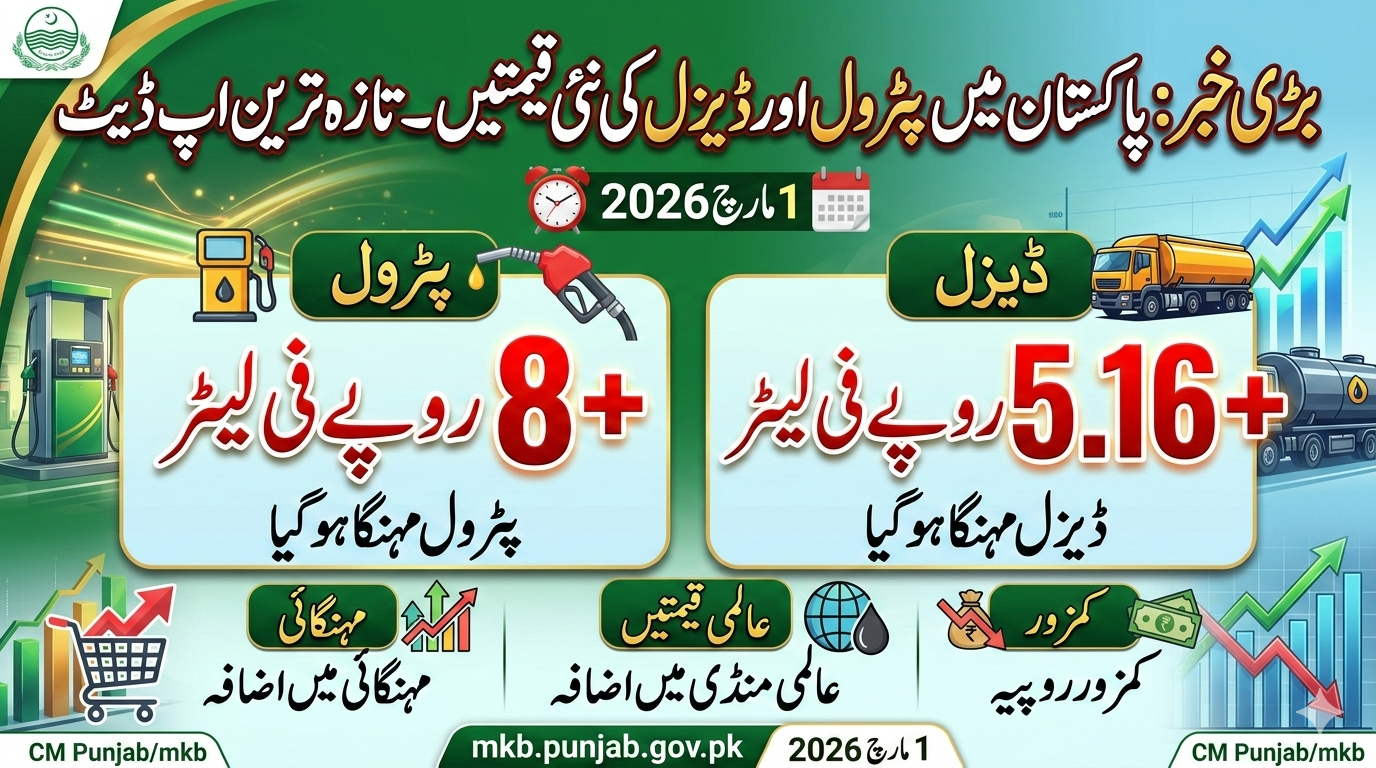
The Federal Government of Pakistan has announced the latest petrol and diesel price hike for 2026 after the most recent fortnightly review by OGRA (Oil and Gas Regulatory Authority). In this update, the price of petrol has increased by Rs. 8 per liter, and High‑Speed Diesel (HSD) has increased by Rs. 5.16 per liter. These revisions are due to rising global crude oil prices and the continued weakness of the Pakistani Rupee (PKR) against the US dollar. Because fuel is a basic necessity for transport, delivery, agriculture, and business, this price adjustment will affect inflation and everyday living costs across Pakistan.
| Feature | Details |
|---|---|
| Petrol Price Hike | +Rs. 8 per liter |
| Diesel Price Hike | +Rs. 5.16 per liter |
| Responsible Bodies | Federal Government & OGRA |
| Price Review Cycle | Fortnightly (Every 15 Days) |
| Main Causes | Global oil rates & PKR exchange rate |
| Economic Impact | Inflationary pressure & transport cost increases |
| Most Affected Sectors | Transport, Agriculture, Goods Logistics |
| Official Source | Finance Division of Pakistan |

Reasons Behind the Petrol & Diesel Price Increase in 2026
Pakistan imports the majority of its fuel requirements, so international petroleum prices directly influence local fuel costs. When the price of Brent crude, the global benchmark for oil, goes up, Pakistan faces higher import bills. This cost is passed to consumers at the pump. Other key factors include:
- A weaker Pakistani Rupee, which makes fuel imports more expensive.
- Rising shipping and freight costs for oil tankers.
- Government Petroleum Levy (PL) and tax components built into pricing.
- Refining, storage, and distribution expenses that add to the final retail cost.
Together, these forces drive periodic increases in petrol and diesel prices in Pakistan.

Impact of Diesel Price Hike on the Economy
Although the diesel price increase is smaller than petrol’s, its effect on Pakistan’s economy is significant. Diesel is the primary fuel used in heavy‑duty trucks, buses, construction machinery, and agricultural equipment. Higher diesel prices mean higher logistics costs, which push up the prices of goods and services nationwide.
| Sector | Primary Fuel | Economic Impact |
|---|---|---|
| Public Transport | Petrol / Diesel | Higher fares for buses and taxis |
| Agriculture | Diesel | Increased costs for tractors & irrigation |
| Goods Delivery | Diesel | Higher freight and delivery charges |
| Construction | Diesel | Higher machinery operation costs |
This ripple effect contributes to rising commodity prices and increases the overall cost of living.

Fuel Price Hikes and Inflation in Daily Life
Fuel price increases often lead to higher inflation, especially in sectors dependent on transportation. When petrol and diesel costs rise:
- Food prices, especially perishables, become more expensive.
- Commuting costs increase for daily workers and students.
- Delivery services add fuel surcharges.
- Production costs for local products rise, affecting the economy.
- Household budgets tighten, especially for middle and low‑income families.
This contributes to movements in the Consumer Price Index (CPI) and general inflation.

Government Policy on Petroleum Levy & Taxes
To maintain revenue and manage fiscal targets, the government applies indirect taxes like the Petroleum Levy (PL) and General Sales Tax (GST) to fuel products. These policies generate revenue but also contribute to higher consumer fuel prices.
- PL is charged per liter and remains a key revenue source.
- GST on petroleum is included in the final retail price.
- OGRA evaluates global rates before recommending price changes.
- Fuel subsidies are limited due to economic reforms and fiscal requirements.
Conclusion:
The recent increase of Rs. 8 per liter for petrol and Rs. 5.16 per liter for diesel reflects global oil market pressures and currency challenges. While these adjustments help the government meet revenue and fiscal goals, they drive higher costs of living and inflation for everyday citizens. By understanding the reasons behind the price changes and their effect on transport and goods prices, households can better anticipate budget needs and plan fuel usage more efficiently during these challenging economic conditions. Stay updated with official government sources for the most accurate information on petrol and diesel prices.
Latest Updates
 Fuel Subsidy for Motorcycles Sindh 2026 Eligibility via SMS
 Fuel Subsidy for Motorcycles Pakistan 2026 Eligibility via SMS
 Today Update: Kuwait Announces Monthly Allowance for Single Women – 2026 Social Welfare Update
 Today Update: Punjab Fake E‑Challan SMS Scam Alert 2026 — How to Protect Yourself Online
 Latest Update: How To Apply Online For Himmat Card 2026 – Complete & Updated Guide
 Latest Update: Step-by-Step Guide to Register a Complaint via Helpline 1000
 Latest Update: Punjab Class 9 Exam Date Sheet 2026 – Full Schedule Announced
 Latest Update: 8171 Web Portal Balance Check by CNIC 2026 – Complete Guide