
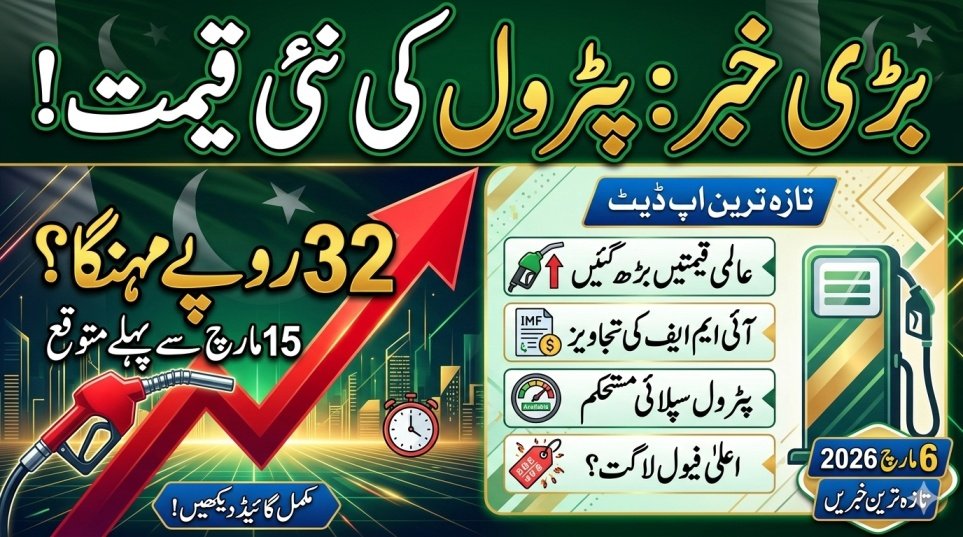
The petrol price in Pakistan 2026 is expected to rise by up to Rs32 per liter before 15 March, according to recent reports. This increase is mainly due to global oil price trends and ongoing economic reforms. Experts say the government may adjust the ex-refinery petrol price to match international market rates, helping maintain fiscal stability while meeting revenue targets. Consumers across Pakistan may soon face higher fuel costs.
| Key Factor | Details |
|---|---|
| Possible Petrol Price Increase | Up to Rs32 per liter |
| Expected Date | Before 15 March 2026 |
| Main Reason | Global oil price increase |
| Policy Influence | IMF economic recommendations |
| Impact on Consumers | Higher fuel cost |
| Government Objective | Maintain fiscal stability |
Global Oil Prices Driving Petrol Price in Pakistan
The petrol price in Pakistan is closely linked with international crude oil rates. When global oil prices rise, the retail petrol price in Pakistan also increases.
Key reasons for rising petrol prices in Pakistan include:
- Global crude oil price surge in recent weeks
- Fluctuating currency exchange rates affecting import costs
- Increased import expenses for petroleum products
- Government policies aligned with international economic reforms
- Economic adjustments required to meet fiscal and budget goals

IMF Recommendations and Petrol Pricing in Pakistan
The International Monetary Fund (IMF) has advised Pakistan to set petrol prices in line with global market rates. The IMF suggests reducing or avoiding fuel subsidies to maintain revenue targets and economic stability.
IMF suggestions include:
- No subsidies on petrol or diesel
- Fuel prices should follow global trends
- Petroleum levy collection must continue as planned
- Maintain overall fiscal balance for economic stability
For official policy updates, visit: Finance Ministry Pakistan

Petroleum Levy and Petrol Price Impact
The petrol price in Pakistan is influenced by the petroleum development levy (PDL). Authorities aim to collect Rs1468 billion by 30 June 2026.
Highlights of PDL and petrol price:
- Rs822 billion already collected in the first six months
- 60% of revenue recorded between July–December 2025
- Maintaining revenue targets is crucial for budget stability
- Any subsidy could reduce government revenue, affecting fiscal balance
| Economic Indicator | Status |
|---|---|
| Petroleum Levy Target | Rs1468 billion |
| Collected in First 6 Months | Rs822 billion |
| Revenue Collection Period | July–December 2025 |
| Policy Objective | Maintain fiscal balance |
| Impact on Petrol Price | Likely increase |
| Government Measures | Monitor supply and adjust pricing |

Government Measures to Reduce Fuel Impact
To manage the economic impact of higher petrol prices in Pakistan, the government is considering measures to lower fuel consumption.
Possible measures include:
- Shifting schools and colleges to online classes
- Implementing smart working systems in universities
- Introducing hybrid work models for government offices
- Regulating market and shop timings
- Expanding grocery and restaurant delivery services
Petrol Supply Situation in Pakistan
Officials confirm that petrol supply in Pakistan remains stable, despite potential price increases.
Supply highlights:
- Petroleum reserves are at satisfactory levels
- Oil marketing companies continue regular distribution
- No immediate fuel shortage is expected
- Authorities continue to monitor the supply chain closely
Conclusion
The petrol price in Pakistan 2026 may rise by up to Rs32 per liter before 15 March, mainly due to global oil price fluctuations and economic reforms. While fuel supply is stable, consumers may soon face higher costs. Proper monitoring, international policy alignment, and careful planning by the government are essential to balance economic stability and public affordability in Pakistan.
FAQS:
What is the expected petrol price increase in Pakistan?
The petrol price may rise by up to Rs32 per liter before 15 March 2026.
Why is the petrol price increasing in Pakistan?
Global oil prices, currency fluctuations, and economic policy reforms are the main reasons.
Is there a petrol shortage in Pakistan?
No, petroleum reserves are currently sufficient, and supply remains stable.
How do international policies affect petrol prices in Pakistan?
Recommendations from international organizations encourage aligning petrol prices with global rates and reducing fuel subsidies.
Latest Updates
 Fuel Subsidy for Motorcycles Sindh 2026 Eligibility via SMS
 Fuel Subsidy for Motorcycles Pakistan 2026 Eligibility via SMS
 Today Update: Kuwait Announces Monthly Allowance for Single Women – 2026 Social Welfare Update
 Today Update: Punjab Fake E‑Challan SMS Scam Alert 2026 — How to Protect Yourself Online
 Latest Update: How To Apply Online For Himmat Card 2026 – Complete & Updated Guide
 Latest Update: Step-by-Step Guide to Register a Complaint via Helpline 1000
 Latest Update: Punjab Class 9 Exam Date Sheet 2026 – Full Schedule Announced
 Latest Update: 8171 Web Portal Balance Check by CNIC 2026 – Complete Guide